



Agenda.
Who attends.
Categories represented in past New York events. Specific firms are shared with confirmed attendees only.


You will not be asked to meet anyone who hasn't expressed interest, and no one will be assigned to you. The system protects your time and your privacy.


We hold the New York event to a tight number of invited guests — roughly 180 in recent years — split between allocators and managers in measured proportions.
We turn down more requests than we accept. The cap exists for a reason: every additional seat affects the quality of every other one.
request lands with someone on our team, who reads it, considers it, and replies
If there is a fit, we set up a short conversation — usually a phone call — to understand what you do and what you are looking for. The invitation, if one is issued, follows from there.
The whole exchange is meant to feel like a thoughtful introduction, because that is what we hope the network is.

We strive to be the cap intro event for allocators who don’t like cap intro events.
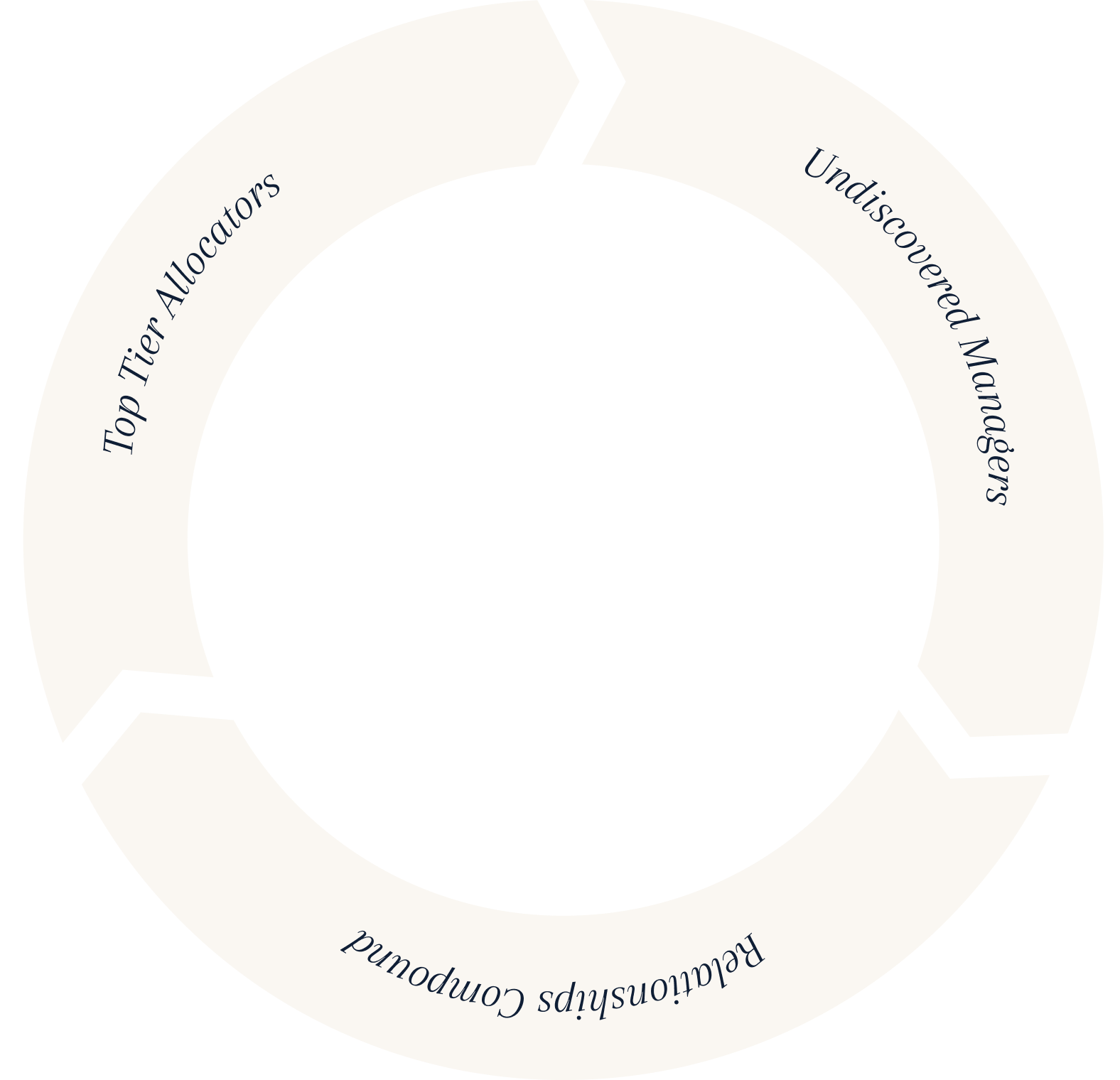
Nearly two decades of curation have created a network whose value is not in its size, but in its quality.
Many of our managers do not attend any other cap intro events and are virtually unknown.
Each of the events we have produced over the last 15 years has strengthened the next one.
We facilitate highly curated introductions to top tier allocators who have proactively expressed interest in your firm.


No other event offers the quality and concentration of small, undiscovered investment managers in one place and time.
Our Sponsors





Questions before requesting an invitation.
Yes. The event is invitation-only, and all attendees are carefully vetted.
Most manager attendees run fundamental, public-equity focused long/short or long-only strategies. We also include a select number of differentiated strategies that are unique and aligned with allocator interest.
Managers’ materials are uploaded to a secure data room, where registered allocators review them and submit meeting requests. We then hand-build the schedules based on those requests, with the goal of maximizing the value and fit of each meeting.
There are eight 30-minute meetings. Each meeting is typically one-on-one, but if a manager receives more than eight meeting requests, we may create a schedule that includes both one-on-one meetings and meetings with multiple allocators.
After the event, managers receive the email addresses of the allocators they met with, unless an allocator has opted out of sharing their contact information. We do not share a full allocator attendee list externally.
