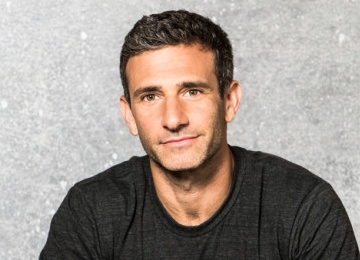
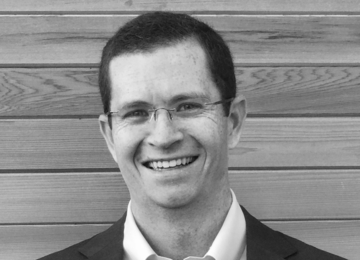
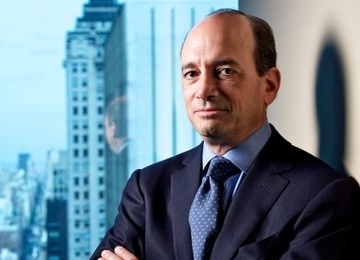
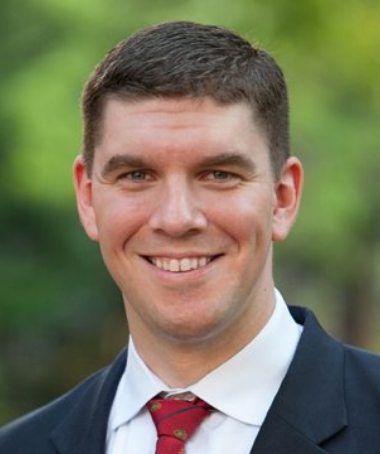
Frank Martin
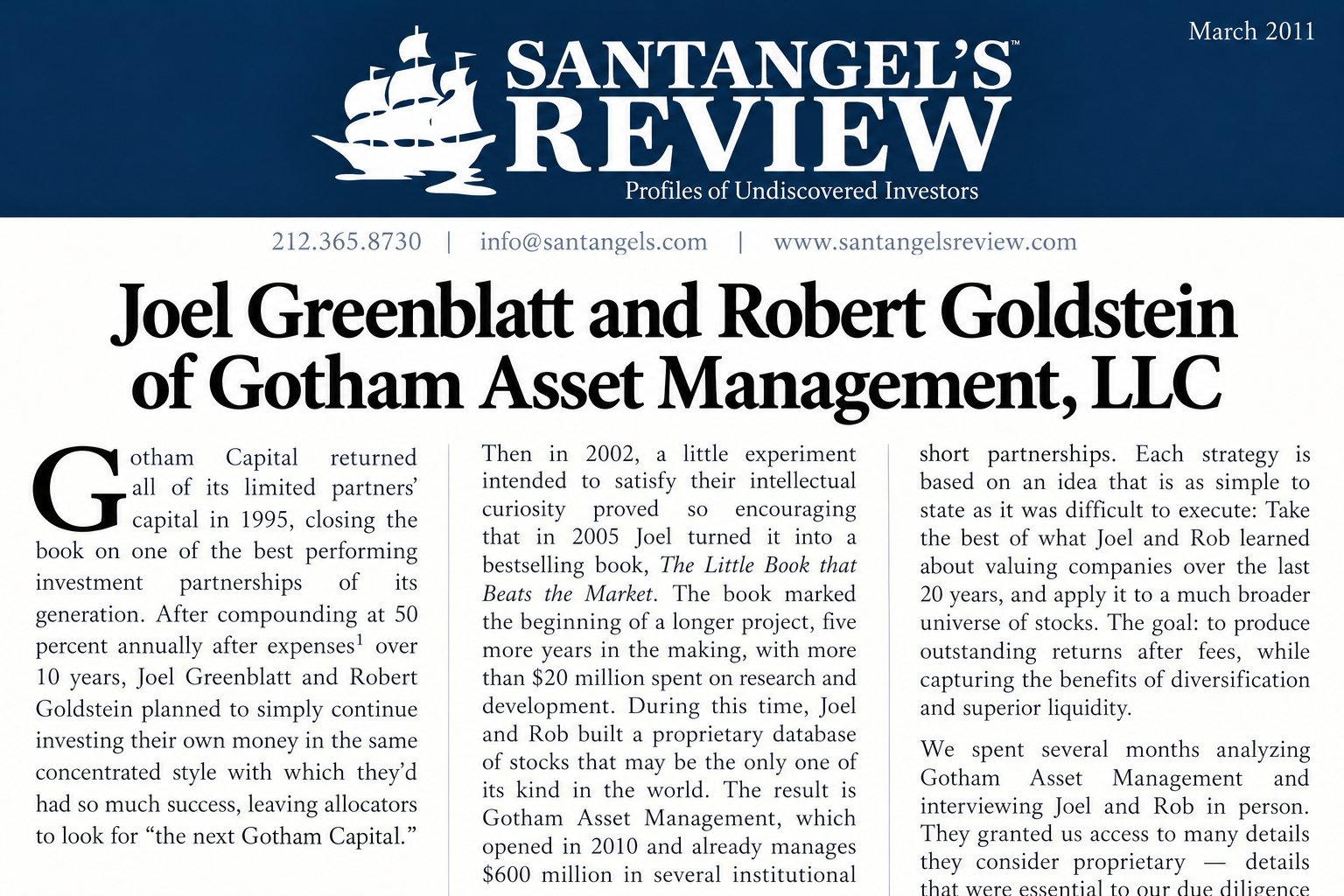
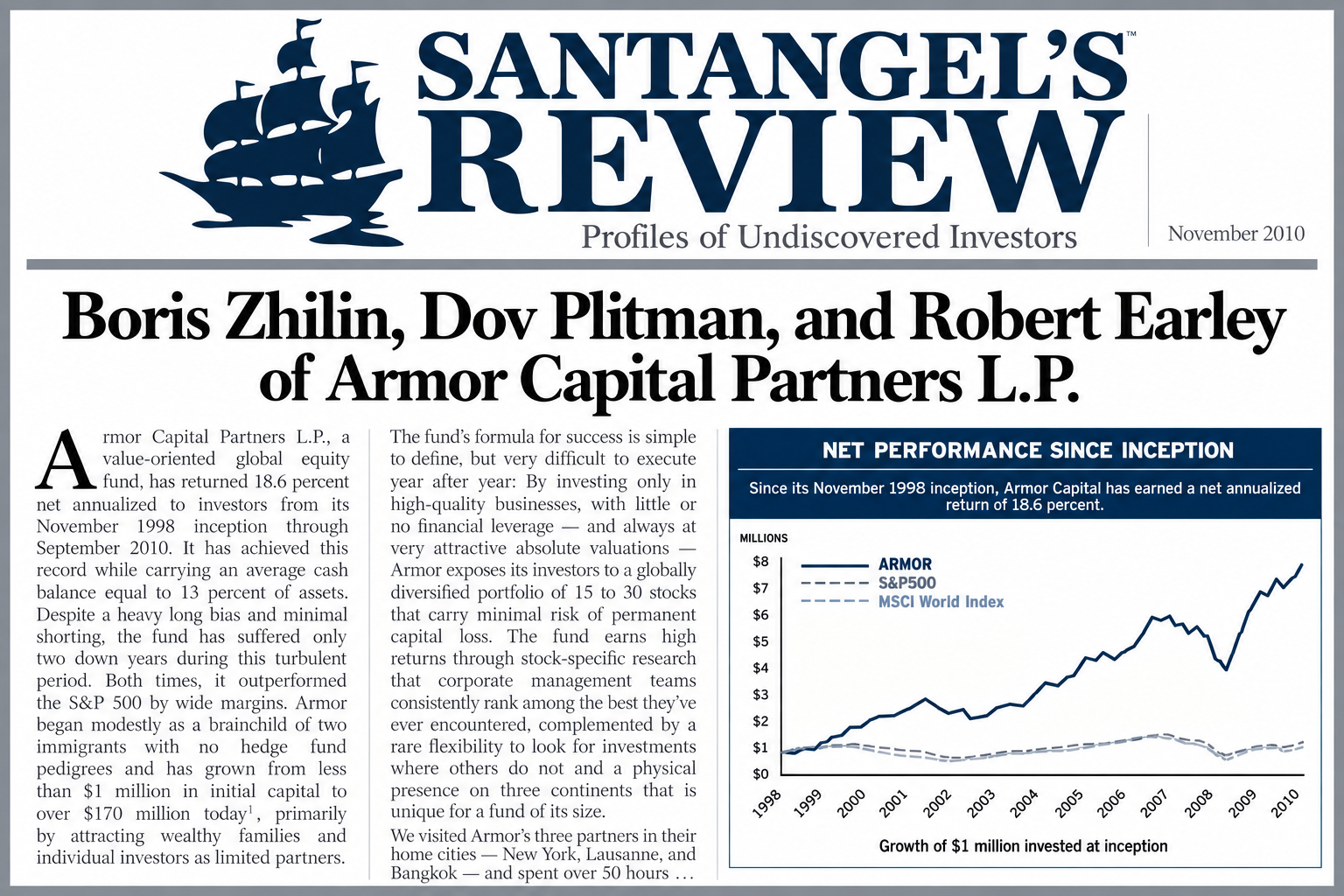
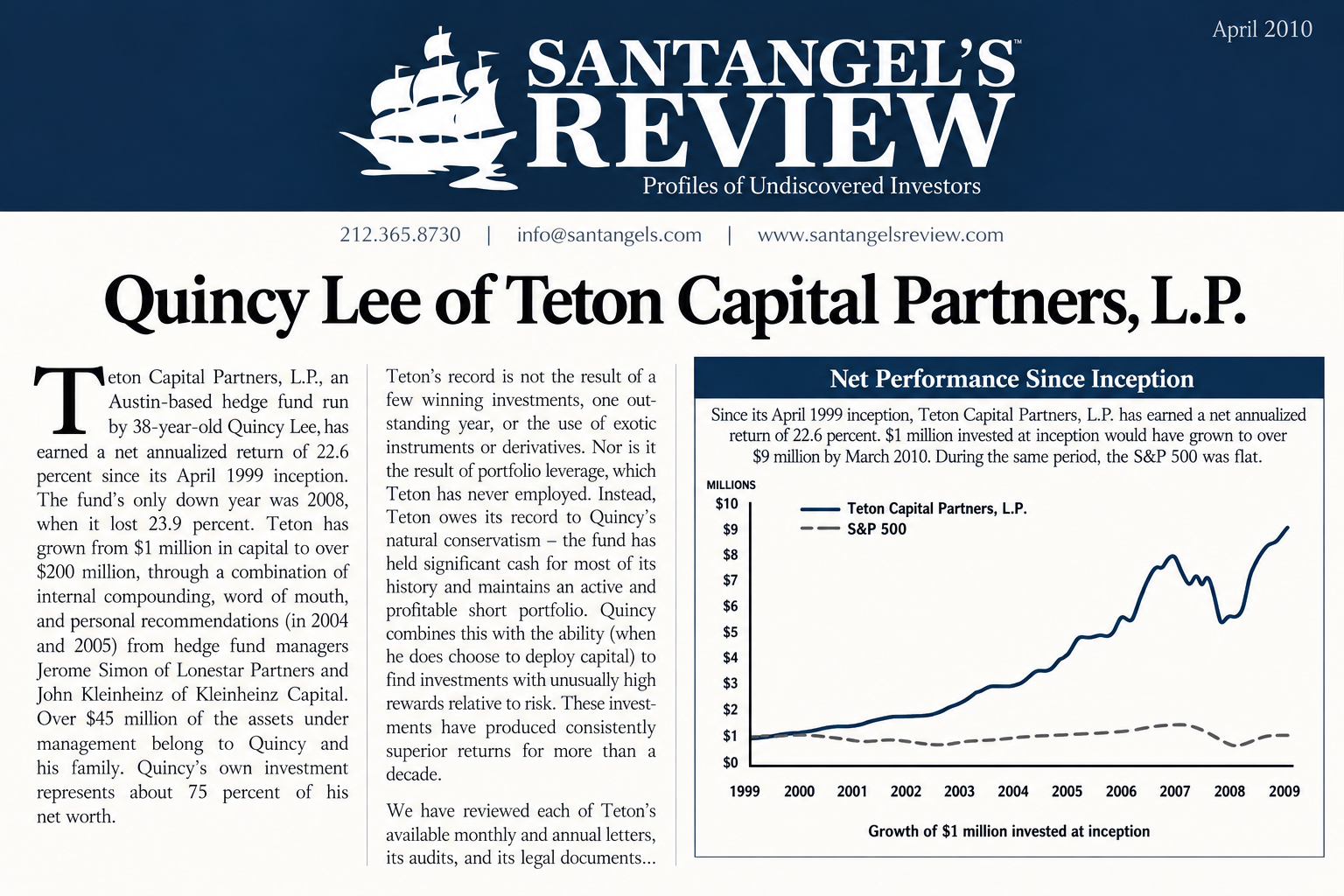
Santangel’s Investor Forum Speakers and Bios, 2012–2019 Speakers are listed in agenda order. Names appearing after “with” on the agendas were treated as moderators or interviewers and are not included. Where no matching biography appeared in the supplied bio text, the entry is marked accordingly. 2012 Frank Martin Frank Martin has more than 40 years of investment industry experience. In 1987, he founded McDonald Capital Management, Inc. The firm was reorganized as a partnership in 1991 and renamed Martin Capital Management with headquarters in Elkhart, Indiana. Martin graduated from Northwestern University in 1964 with a Bachelor of Science degree and a major in investment management. Following undergraduate school, he served as an officer in the U.S. Navy from 1964-1966. He earned an MBA with honors, including membership in the Beta Gamma Sigma honor society of collegiate schools of business, from Indiana University South Bend in 1978 and received his CFA certificate in 1987. Martin has served on boards of directors of several manufacturing companies and a broad variety of social service organizations, often in the role of chairman. He is founder and chairman of DreamsWork, a mentoring and scholarship program for inner-city children. Martin is an avid reader, writer, and a quiet philanthropist. In recognition of both his extensive public service and professional career, Martin was named a recipient of the Distinguished Eagle Scout Award in 2010, one of only 2,000 Eagle Scouts to have achieved that honor since its introduction in 1969. Martin published a biography of his father, William F. Martin, in 2000. He has also published two books on investing: Speculative Contagion (2005) and A Decade of Delusions (2011). Phil Goldstein In December 1992, after working twenty-five years as a civil engineer for the City of New York, Phillip Goldstein co-founded what is now Bulldog Investors, a value oriented group of private investment funds that invest primarily in closed-end funds, small cap operating companies, special purpose acquisition companies (SPACs), and special situations. Bulldog Investors often employs activism to unlock or enhance the intrinsic value of its investments. Since 1996, Bulldog has conducted more than 30 proxy contests. Opportunity Partners L.P., Bulldog’s original fund has returned more than 12.5% per annum net to its investors for almost two decades and has had only one losing year. In 2009, Mr. Goldstein and his partners at Bulldog gained control (via a proxy contest) of Insured Municipal Income Fund, a registered closed-end mutual fund seeking tax free income. They then formed Brooklyn Capital Management LLC, to serve as the Fund’s new investment advisor. The Fund’s name was changed to Special Opportunities Fund (NYSE: SPE) and its objective changed to total return. Mr. Goldstein is currently a director of Imperial Holdings, the Mexico Equity & Income Fund, ASA Gold & Precious Metals, MVC Capital, and Special Opportunities Fund. Jane Siebels Jane Siebels grew up on a working farm in the small town of Anamosa, Iowa, where she began taking soybean orders over the phone at age 5. This early experience in commodities trading propelled her rapid ascent in investing : she funded her graduate education in management at the Thunderbird School of Global Management with profits she had made shorting stocks in college, and by 24 years old, she was managing $100 million in a portfolio of international stocks for Storebrand, a Norwegian reinsurance company. Her impressive performance at Storebrand, and later, at UBS, ultimately attracted the attention of Bahamas-based Templeton, Galbraith & Hansberger, which Jane joined in 1990. In an impressive career that had already spanned five countries in five years, it was here in Nassau that Jane made her name under the mentorship of the legendary Sir John Templeton. From 1990 to 1997, she managed $3 billion in capital and when that firm was sold, Templeton was one of the original backers of Jane’s first fund, the Green Cay Emerging Markets Fund. He also introduced Jane to Julian Robertson, who went on to seed Jane and make her the first “Tigress.” Jane currently lives in the Bahamas and runs Green Cay Private Client. Michael Masters Michael Masters is the founder of Masters Capital Management. Over 17 years, the firm has compiled one of the best track records of any hedge fund, with an average annualized return of 26 percent. Such outperformance has been realized by a unique yet straightforward investing style that Michael has refined over the years—part fundamental and part trading—and rooted in an underlying belief that money moves markets and people move money. Market participants’ behavior, therefore, plays a central role in Michael’s investing style, but he has also drawn upon the study of other fields including philosophy, psychology, and intelligence. While Michael’s $200 million AUM firm flies under the radar, he is more widely known in Washington, D.C., where he has vigorously pursued financial legislative change. Over the past few years he has testified before Congress, the Commodity Futures Trading Commission, and the Financial Crisis Inquiry Commission arguing for tighter regulation on oil speculation. In April 2010, Michael also founded Better Markets, a D.C.-based nonprofit to promote transparency and accountability in the financial markets. Francis Daniels Mr. Francis Daniels co-founded Africa Financing Review in 1994. In 1998 Mr. Daniels became a legal consultant to the New Africa Opportunity Fund LP in South Africa. In 1998 he was also appointed president of The Africa Phoenix Group Inc., a U.S.-based company which provides advice to institutional investors on sub-Saharan African debt and equity. He was admitted to the bar in the state of New York in 1987 and from then until 1993 he practised commercial law on a full-time basis in New York City. Mr. Daniels has been Director of TA Holdings Limited, listed on the Zimbabwe Stock Exchange, since 2000. He has been Non Executive Director of Ocean Resources Capital Holdings plc since October 31, 2005. He serves as a Director of Zimnat Asset Management Company (Private) Limited and Masawara PLC. He has been Non-Independent Non-Executive Director of Africa Opportunity Fund Ltd since June 2007. He serves as Non Executive Director of UraMin Inc. and Zimnat Lion Insurance Co. He has been a member of the New York State Bar since 1987. Mr. Daniels holds an LLB degree from the University of Ghana and two LLM degrees from the University of Toronto in Canada and New York University in the United States. John Hempton John Hempton has extensive experience in global markets with Platinum Asset Management - an Australian based global fund manager. John was the chief analyst for financial stocks globally and a partner in the business. A more extensive curriculum vitae can be found here. Ian Jacobs While a first-year student at Columbia Business School, Ian Jacobs, a former analyst at Goldman Sachs, did what many business school students often do: pen a letter to Warren Buffett. The important difference: Buffett not only wrote back, but was so impressed by the 25-year old that he invited Ian to come work for him that summer. That was the beginning of a nearly 6 year relationship where Ian worked at Berkshire Hathaway on investment research and other projects as directed by Buffett. In 2009 Ian launched the 402 Fund. The limited partnership, concentrated and long-only, focuses on businesses with an identifiable structural competitive advantage. Bill Martin In 1997, while a student at the University of Virginia, Bill Martin co-founded RagingBull.com, a financial website that went on to become popular during the dot-com era. After selling the site three years later, Bill began an equity research business and in 2004, co-founded InsiderScore, an institutional analytics service focused on insider and money flow related data. He launched Raging Capital Management in April 2006 with capital from friends and family. The firm’s net returns from its main strategy have outperformed the S&P 500, Russell 2000, and HFRX Equity Hedge Index since inception, and its AUM is now close to $650 million. Raging Capital invests in both emerging growth stocks and deep value investments. Bill is one of the rare fund managers who has excelled at both long- and short-side investing, and Raging Capital has generated alpha on the short side over the S&P 500 TR. At the 2015 Santangel’s Investor Forum, Bill will speak about his investment philosophy and share an idea. 2013 Paul Isaac Despite being the nephew of the venerable Walter Schloss and steering his hedge fund, Arbiter Partners, to a 22 percent net annualized return since its 2001 inception, Paul Isaac remains little known to the investing world. He hasn’t escaped the attention of James Grant, though, who wrote simply in the dedication to his third book: “To Paul Isaac, who knows everything.” While Paul is the first to admit that he doesn’t know “everything,” he was exposed to intelligent investing at a young age. (In addition to Schloss, Isaac’s father was a very successful investor and Max Heine was a frequent dinner guest). Like many value investors, Paul buys stocks that have recently disappointed with prices down significantly. Paul tends to hold these positions for long periods of time and almost all of Arbiter’s gains since inception have been long-term capital gains. At the 2013 Santangel’s Investor Forum, Paul will speak about his brand of long-term and tax-efficient value investing. Geoffrey Batt Until his junior year at Columbia University, Geoffrey Batt had no interest in financial markets. He was a philosophy major whose career goal was to become a professor. Then a chance encounter with a PhD student named Daniel Cloud changed everything. Cloud was pursuing a PhD in philosophy after running a hedge fund called Firebird Management. Unbeknownst to Batt at the time, Firebird Management had been the very first fund to invest in Russia after the collapse of the Soviet Union and had compounded capital at a remarkable rate for 16 years. Initially, the two bonded over their love of philosophy, but when Batt’s student loans fell through and he was forced to leave school temporarily, Cloud offered him a job at a new emerging market hedge fund he was launching called Quantrarian Capital Management. 10Ks quickly replaced Batt’s philosophy texts as Cloud taught him the art and science of investing. Under Cloud’s tutelage, Batt began searching for the next great frontier market and believes he has found it in Iraq where companies are among the fastest growing in the world and yet are also some of the cheapest. At the 2013 Santangel’s Investor Forum, Geoffrey Batt will speak about the gap between reality and perception he sees in Iraq and also share insights on how lessons from frontier investing can be applied to established markets. Russell Redenbaugh At the age of 16, Russell Redenbaugh was at home building an experimental rocket when it suddenly exploded in his hands. He lost all but four fingers and sight in both eyes. But in the hospital, upon learning that he would be blind for the rest of his life, Russell vowed to himself that he would continue to live his life as if he was fully sighted. To fulfill this promise, Russell decided against learning Braille. He continued his education at the local high school and then the University of Utah, where he graduated first in his class. After being rejected from both Stanford and Harvard Business schools because they didn’t believe a blind person could manage their programs, Russell convinced the University of Pennsylvania’s Wharton School to give him a chance. Russell not only managed the program, but came in fifth in his class. After graduating, Russell joined Cooke & Bieler, then a small, boutique investment management firm where he eventually became chief investment officer and helped grow the firm to $6 billion in assets under management. After leading a sale of that firm and becoming a multi-millionaire in the process, Russell was appointed to the U.S. Commission on Civil Rights by Senator Bob Dole who called him “a profile in courage and achievement.” Russell, who was the first handicapped person ever to be on the Commission, served for 16 years and received an inside look at how government policy is made and how it impacts both citizens and markets. When he turned 50 in 1995, Russell started training in Brazilian jiu-jitsu to improve his physical fitness. He quickly became hooked on the sport and began competing in local competitions. In 2003, he decided to travel to Brazil for an international competition against sighted opponents. He won a gold medal in that competition and returned to Brazil in 2004 and 2005, again winning gold medals. At Kairos, Russell has developed a unique investment style based on his past experiences and believes that shifts in government policy and incentives can not only lead one to know what to invest in, but also when to invest. At the Santangel’s Investor Forum, Russell will speak about how “narratives” often set securities prices and how he, despite being physically blind, is often able to “see” these narratives better than others. Madhav Bhatkuly In 1999, at the age of 33,Madhav Bhatkuly was tapped to launch and run Arisaig Partners’ India Fund with $16 million of initial capital. Over the next six years, Arisaig’s bet on Madhav paid off handsomely as he steered the India Fund to one of the best records in India, more than doubling the BSE Sensex Index and growing the India fund to over $500 million. In 2005, Madhav partnered with The Children’s Investment Fund (TCI) to set up an India dedicated fund. He again trounced the benchmark before deciding in 2008 to launch his own fund, New Horizon Investments. From October 2008 through July 2013 New Horizon has been the top-performing fund in India, based on publicly available information. It has returned over 130 percent net since inception (seven times the return of the BSE Sensex Index) and has beaten the next best performing fund in India by more than 4,000 basis points. Madhav has built this tremendous track record over the last 15 years in part by finding and investing in Indian “compounding machines” while they are still small and under-recognized by the rest of the market. Many of these investments have gone up 5 to 50 times from the price of first purchases. At the 2013 Santangel’s Investor Forum Madhav will speak about his process for finding multi-baggers in India and share a recent investment that he believes is an unrecognized “compounding machine. Matt Christensen In 11 years of managing money, Matt Christensen has applied the same commitment and tenacity to investing that he brought to playing basketball at Duke University under coach Mike Krzyzewski. Alongside his father, Harvard Business School professor Clayton Christensen, Matt has achieved success with a merger of business research and investing. In 1997, Clayton Christensen published The Innovator’s Dilemma, which introduced his theory of “disruptive innovation” to the world. After Matt graduated from Duke with degrees in Economics and Civil Engineering and an NCAA Basketball Championship, he began investing his family’s money, extending disruptive innovation into an investment strategy. After five years of investing on the side while Matt was consulting at Boston Consulting Group and Innosight and studying at Harvard Business School, in August 2007 the Christensens launched Rose Park Advisors in order to offer their strategy to outside investors. (Today Clayton Christensen is Chairman of Rose Park Advisors but is not involved in day-to-day operations.) Rose Park’s Disruptive Innovation Fund exclusively invests in companies estimated to be undervalued given their disruptive prospects and shorts companies estimated to be overvalued given their likelihood of being disrupted. Since inception, the Fund has returned eight times the Hedge Fund Research Equity Hedge (Total) Index. At the 2013 Santangel’s Investor Forum, Matt will speak about why he believes disruptive innovation is the most powerful value creation force in business and investing. Brian Klein Brian Klein, cofounder of Steelhead Partners, hasn’t spoken publicly in more than 15 years. He decided to participate in the 2013 Santangel’s Investor Forum, in part, because he believes that Steelhead’s long/short strategy has one of the best reward-to-risk ratios since its inception in 1997. Steelhead, which has just over $1 billion in assets under management, is located in Bellevue, Washington, a small city far from Wall Street that Brian believes fosters a very independent mindset for the firm. In fact, many of Steelhead’s investors say that the firm’s positions are among the most unique of all their hedge fund investments. The diversity of Steelhead’s positions also stems from an investment strategy that focuses on companies with “a lot of hair on them.” Steelhead’s ideal position is one in which the stock price suggests a company is broken and heading to zero, but where deep fundamental research reveals an alternative reality. Though rare, these highly inefficient situations have allowed Steelhead to make what the firm believes to be low risk investments in companies that most market participants overlook. At the Santangel’s Investor Forum, Brian will share an investment that exemplifies why he believes risk is often the least when it appears the greatest and the greatest when it appears the least. J.D. Kritser J.D. Kritser, senior analyst at Steelhead Partners, joined the firm in 2005 to support its investment and research activities. J.D. has invested across the capital structure and has experience working in “stressed” and distressed situations. A generalist by nature, J.D. has spent considerable time finding and analyzing companies in out-of-favor industries such as coal, forest products, telecom, metals and mining, among others. Before joining Steelhead, J.D. was an Associate at Newbridge Capital, LLC, an Asia-focused private equity fund formed by Texas Pacific Group and Blum Capital Partners, where he sourced and executed buyouts across Southeast Asia and Australia in numerous industries. J.D. was also an investment banking analyst for Lazard Frères, LLC in its New York mergers and acquisitions group. He graduated magna cum laude and Phi Beta Kappa from Washington & Lee University in 1998 and received his MBA from the Haas School of Business at the University of California, Berkeley in 2005. Desmond Kinch In 1989, when he was just 26 years old, Desmond Kinch cobbled together $200,000 from friends and family to launch Overseas Asset Management (OAM). In the years since, OAM launched two internationally focused funds, and Desmond has grown the firm to more than $500 million in assets. Both the OAM European Value Fund and OAM Asian Recovery Fund have been comfortably in the top decile of their peer groups since they were launched, 10.5 and 14.5 years ago, respectively. Desmond has achieved all this while based in—of all places— the Cayman Islands. The key to his success has been a focus on inefficient and tumultuous areas of the market and an adaptable approach to finding value. At the 2013 Santangel’s Investor Forum, Desmond will profile an undervalued European equity and speak more broadly about his unique and interesting approach to investing on the continent. Jason Stankowski Jason Stankowski founded the Clayton Capital Appreciation Fund, LP in 2003. Jason, a self-taught investor, focuses on a profitable yet overlooked niche: investing in underperforming small cap companies with new, high-quality management teams. Jason believes that a great management team can determine much of a company’s future value through capital allocation and operational improvements, but that the market is often slow to recognize its impact. Mining this niche has allowed the fund to have an average annualized net return of 15.1 percent over the last decade. At the 2013 Santangel’s Investor Forum, Jason will speak about how he finds and judges great management teams and will share an investment idea where the market is failing to recognize a management-led turnaround. 2014 Joel Greenblatt In 1995, Gotham Capital returned all of its limited partners’ capital closing the book on one of the best performing investment partnerships of its generation. Joel Greenblatt and his partner, Rob Goldstein, didn’t want out of the business; they just planned to invest their own money in the same concentrated style with which they’d had so much success. Then in 2002, a little experiment in systematic investing, intended to satisfy Joel and Rob’s intellectual curiosity, proved so encouraging that three years later, it formed the basis of Joel’s bestselling book, The Little Book that Beats the Market. That book marked the beginning of a longer project, with five more years of tinkering and more than $20 million poured into research and development. The result of this significant effort: a proprietary database of stocks that may be the only one of its kind in the world and a new investment entity called Gotham Asset Management. The firm is based on an idea that is as simple to state as it was difficult to execute: Take the best of what Joel and Rob had learned about valuing companies over 20 years and apply it systematically to a much broader universe of stocks. At the 2014 Santangel’s Investor Forum, Joel will share an in-depth case study on a “special situation” he once owned and explain why he virtually abandoned investing in this category of stocks and decided instead to pursue something that on the surface seems so different. Jamie Mai Jamie Mai first caught the attention of the investing world when he was profiled in Michael Lewis’ The Big Short. By buying credit default swaps on CDOs prior to the 2008 financial crisis, Jamie’s firm, Cornwall Capital, made over 80 times its capital. A history major in college, Jamie worked at private equity firms Golub Capital and Housatonic Partners before founding Cornwall Capital in 2002. While most value investors invest only when they are confident they won’t lose a significant amount of money, Jamie thinks about margin of safety in probabilistic terms. Cornwall looks across the risk spectrum for opportunities that are often “off limits” to most value investors- from low probability/high return investments, to ambitious special situations. A critical step in Jamie’s investing process is to test his hypotheses with smart investors and he therefore plans to share a new idea at the 2014 Santangel’s Investor Forum. Mark Landecker Bio not provided in the supplied materials. Will Thorndike Will Thorndike was 23 years old when he first read about Warren Buffett in John Train’s seminal work, Money Masters of Our Time, and took from that book a simple yet important insight that would shape the rest of his career: It was far better to be invested in good businesses than poor ones. The precept is one that Will held close over the years as he moved from Stanford Graduate School of Business to T. Rowe Price to his own private equity firm, Housatonic Partners, which he founded in 1994 to focus on companies with enduring growth and profitability. By 2012, investing in good businesses had propelled Housatonic to grow to more than $1 billion in assets under management. The firm was operating quietly under the radar until Will wrote a book that spread like wildfire in the value investing community. The Outsiders, published in 2012, features eight CEOs who excelled at capital allocation using unconventional methods. Warren Buffett recommended The Outsiders in his 2012 Letter to Shareholders and, more recently, Bill Ackman cited the book as inspiration for his proposed Valeant/Allergan deal. At the 2014 Santangel’s Investor Forum, Will Thorndike will speak about finding and recognizing the next generation of “Outsider” CEOs. Jane Siebels Jane Siebels grew up on a working farm in the small town of Anamosa, Iowa, where she began taking soybean orders over the phone at age 5. This early experience in commodities trading propelled her rapid ascent in investing : she funded her graduate education in management at the Thunderbird School of Global Management with profits she had made shorting stocks in college, and by 24 years old, she was managing $100 million in a portfolio of international stocks for Storebrand, a Norwegian reinsurance company. Her impressive performance at Storebrand, and later, at UBS, ultimately attracted the attention of Bahamas-based Templeton, Galbraith & Hansberger, which Jane joined in 1990. In an impressive career that had already spanned five countries in five years, it was here in Nassau that Jane made her name under the mentorship of the legendary Sir John Templeton. From 1990 to 1997, she managed $3 billion in capital and when that firm was sold, Templeton was one of the original backers of Jane’s first fund, the Green Cay Emerging Markets Fund. He also introduced Jane to Julian Robertson, who went on to seed Jane and make her the first “Tigress.” Jane currently lives in the Bahamas and runs Green Cay Private Client. Scott Clark Bio not provided in the supplied materials. Josh Kaufman Josh Kaufman picked an unconventional time to launch his value investing career: he started in Goldman Sachs’ Media and Telecom investment banking group at the peak of the dot-com & telecom bubbles. As those sectors collapsed, Josh was deeply influenced by the dramatic stock market fallout. That formative experience led him to Korsant Partners, which happened to be looking to invest in many of the former high flying companies that were now distressed and trading at exceptionally low valuations. After two years at Korsant and a short run at MSD Capital, Josh teamed up with fellow MSD analyst, Craig Nerenberg, to form Brenner West Capital Partners in 2005. Over the last nine years, the fund has grown to nearly $1.4 billion in assets under management with an opportunistic approach to sourcing ideas. Josh and his team turn over hundreds of rocks to yield a concentrated portfolio of a small number of new ideas each year. Tom Claugus One of the best track records in investment management of the last two decades almost didn’t happen. Tom Claugus, a chemical engineer by training, was content in his 17 years as an executive at Rohm and Haas and hoped to be CEO one day. When he started making more money from investing than from his salary, however, he realized he could turn his passion into a real job. Tom launched GMT Capital in 1993. His fund’s results over the last 21 years have been nothing short of remarkable: The Bay Resource Partners fund has annualized over 16 percent net of fees and now manages more than $5 billion. Unlike most value investors who begin with a bottom-up process, Tom first looks for extremes in statistical valuation to identify sectors and markets that may be mispriced. This reversion-to-the-mean approach is combined with a focus on free options: stocks priced reasonably, but with significant future revenue and earnings power poorly understood by the market. At the 2014 Santangel’s Investor Forum – his first time ever presenting at a conference – Tom will speak about his unique style of investing and share an idea with attendees. Ian Jacobs While a first-year student at Columbia Business School, Ian Jacobs, a former analyst at Goldman Sachs, did what many business school students often do: pen a letter to Warren Buffett. The important difference: Buffett not only wrote back, but was so impressed by the 25-year old that he invited Ian to come work for him that summer. That was the beginning of a nearly 6 year relationship where Ian worked at Berkshire Hathaway on investment research and other projects as directed by Buffett. In 2009 Ian launched the 402 Fund. The limited partnership, concentrated and long-only, focuses on businesses with an identifiable structural competitive advantage. 2015 Shayan Mozaffar Shayan Mozaffar has an uncommon approach to investing, honed not only by his work experience, but also by his unique life story – having moved to the United States on his own from his native Pakistan at the age of 18 with only $1,000 to his name. After graduating from the Applied Value Investing Program at Columbia Business School in 2011, Shayan was the first hire at Tyrian Investments, a firm seeded by Julian Robertson. He then worked at Slate Path Capital as a consultant before launching his own fund, Solomon Global, in 2015. Over his career, Shayan has analyzed hundreds of current and historical case studies of successful long and short investments. He calls them “movies” and studies them, frame by frame, to enhance his ability to recognize, research, and invest in high quality investment opportunities. This rigorous approach has enabled Shayan to identify sizable mistakes in market perception so as to capitalize on them in a more timely and effective manner. At the 2015 Santangel’s Investor Forum, Shayan will share what he has learned from the “movies” he has studied as well as explain how a pertinent “movie” has provided a roadmap for a current investment idea. Joel Lusman Bio not provided in the supplied materials. Wayne Chambless Growing up on his family farm in rural Georgia, Wayne Chambless developed an interest in investing at a young age when his grandfather explained how he would hedge against the vicissitudes of the commodity markets by buying and selling futures contracts. He pursued this interest as an undergraduate at Yale and as a graduate student at The Wharton School. A chance encounter during a business school summer internship with famed short-seller Jim Chanos sparked Wayne’s interest in finding over-valued, faddish or fraudulent businesses. Throughout his career, Wayne has been at the forefront of some of the most significant short themes of the last decade including the U.S. financial crisis and for-profit education companies, for which he presented his findings before the U.S. Senate. Wayne spent five years under the tutelage of Chanos at Kynikos Associates before joining Trafelet & Company as Director of Research. In 2009 he co-founded the short-biased fund, Harrier Hawk Management and was later recruited to SAC Capital. In 2014, Wayne joined Highbridge Capital, where he is a Senior Portfolio Manager responsible for the Short-Focused Equity Strategy. At the 2015 Santangel’s Investor Forum, Wayne will speak about the art of short selling and share a recent idea. Mark Leonard Mark Leonard, a former venture capitalist, founded Constellation Software in 1995. Since the technology company was first listed on the Toronto Stock Exchange in 2006, its stock has returned 7,700 percent (35 percent CAGR). Constellation has been one of the best performing stocks in North America over the last decade in part due to its acquisition track record. Constellation Software has raised only $100 million of equity and now has a market cap of $8 billion and revenues of approximately $1.7 billion. To date, it has also paid $340 million in dividends to its investors. At the 2015 Santangel’s Investor Forum, Mark will speak about the company’s investment philosophy and share lessons from Constellation’s capital allocation decisions over the last two decades. Stephen Duneier Stephen Duneier has been studying behavioral biases for the last 25 years, successfully applying what he has learned to investing. Until 2014 he managed funds with as much as $1.25 billion in AUM and averaged annual returns over 20 percent. He now teaches several courses on decision analysis at the University of California, Santa Barbara and publishes investment research through his firm, Bija Advisors. Stephen looks to take advantage of the myopia that can result from group think. To do so, he purposely avoids reading newspapers, Wall Street research and other forms of curated information that he thinks could be “tainted” with other people’s views. Instead, he prefers to analyze raw data to inform his worldview and come up with original ideas. As part of his process, each year Stephen makes an unusual New Year’s resolution – one year it was to learn 12 new skills including unicycling, another it was hiking every trail in the Santa Barbara mountains, where he lives. He views these resolutions, which push him outside of his comfort zone, as critical to keep him thinking in new ways. At the 2015 Santangel’s Investor Forum, Stephen will speak about how to improve performance through a more mindful approach to decision making. He may also share how a knitting resolution turned him into a social media sensation and soon, a Guinness World Record holder. Bill Martin In 1997, while a student at the University of Virginia, Bill Martin co-founded RagingBull.com, a financial website that went on to become popular during the dot-com era. After selling the site three years later, Bill began an equity research business and in 2004, co-founded InsiderScore, an institutional analytics service focused on insider and money flow related data. He launched Raging Capital Management in April 2006 with capital from friends and family. The firm’s net returns from its main strategy have outperformed the S&P 500, Russell 2000, and HFRX Equity Hedge Index since inception, and its AUM is now close to $650 million. Raging Capital invests in both emerging growth stocks and deep value investments. Bill is one of the rare fund managers who has excelled at both long- and short-side investing, and Raging Capital has generated alpha on the short side over the S&P 500 TR. At the 2015 Santangel’s Investor Forum, Bill will speak about his investment philosophy and share an idea. Jonathan Salinas Jonathan Salinas founded Plymouth Lane Capital Management in 2013 after working at Marble Arch Investments and ZBI Equities. Jonathan focuses on behavioral inefficiencies and temporary dislocations in investor perception to find idiosyncratic special situations with significant upside. His high tolerance for volatility and low net exposure mean that he owns securities that appear to “have a lot of hair on them.” He balances out the portfolio with very high quality businesses that have multi-year runways to compound earnings as well as a short book that has an emphasis on terminal shorts. Jonathan is an adjunct professor at Columbia Business School where he teaches Applied Security Analysis and Distressed Investing. Eric Yip Bio not provided in the supplied materials. 2016 Sanjay Sen When Sanjay Sen was 10 years old, his first investment was in special edition stamps commemorating the 1987 Halley’s Comet, hoping they would appreciate when the comet is poised to return in 2061. He may not have been familiar with value investing then, but by high school, he had discovered Warren Buffett and Peter Lynch, and now describes himself as a “value investor to the bones.” Today, as co-founder of the $1.6 billion (CAD) AUM fund, BloombergSen, Sanjay isn’t quite as long-term oriented as his 10-year old self, but he has built an outstanding track record investing in a concentrated portfolio of great businesses that the fund holds for an average of seven years. Sanjay and his partner search the globe for companies with high returns on capital, recurring revenue, free cash flow, great management, and limited competition. They will sit on cash until they find these promising investments that they can also buy cheaply. At the 2016 Santangel’s Investor Forum, Sanjay will talk about a company he calls a classic great business that has gotten too cheap. Shane Parrish As an MBA student, Shane encountered the shortcomings of business school when a professor presented the solution to a case his class was reviewing. The solution fit the textbook perfectly, but it had obvious gaps that knowledge from other disciplines would have exposed. Frustrated with what he was learning, he began a quest to master what he calls “the best of what other people have already figured out.” He started the website Farnam Street in 2009 to keep track of his learning and share mental frameworks with a wider audience. The site has grown from a handful of readers to over 80,000 subscribers today. Shane believes that knowing the big ideas from multiple disciplines helps you rationally understand problems and puts you in a better position to succeed. At the 2016 Santangel’s Investor Forum, Shane will share insights he has gleaned from his years studying human misjudgment, decision-making and strategy. Jonathan Goodman Jonathan Ross Goodman is the CEO and founder of Knight Therapeutics, a publicly traded specialty pharmaceutical company focused on under-served and tertiary markets. Prior to Knight, Jonathan was the CEO of Paladin Labs, a specialty pharmaceutical company that he grew from $6 million in annual revenue to $270 million over 18 years. In 2014, Jonathan sold Paladin for $3 billion, a 100 fold return from the IPO listing. Jonathan launched Knight Therapeutics on the same day that he sold Paladin as he loved making a difference in the health of Canadians while making a healthy living in the process. At Knight, Jonathan intends to execute on the same strategy that made Paladin so successful: cheaply acquiring under-utilized drugs to sell in tertiary markets, especially Canada; lending money on a fully secured basis to other pharmaceutical companies; and snapping up assets from distressed rivals. At the 2016 Santangel’s Investor Forum, Jonathan will speak about the specialty pharma industry, why he thinks the Valeant model is troubled and how he hopes to take advantage of this sector’s distress with his new vehicle. Tony Deden Tony Deden is the Chairman of the Executive Committee of Edelweiss Holdings, a Bermuda-based investment holding company that he first launched as a fund in 2002. After building a remarkable track record, Tony recently converted Edelweiss into a holding company with over $300 million in assets and holdings that range from branded dairy products to a fragrance company and a salmon farm. Edelweiss seeks to deploy capital with like-minded owners and plans to hold its investments forever. Tony prizes safety of capital above all else and has structured Edelweiss to survive any type of economic situation. At the 2016 Santangel’s Investor Forum, Tony will share an investment idea and speak about why focusing on “scarcity” may be the most important factor driving his investing success. Steve Eisman With over 20 years of investment experience, Steven Eisman is one of the most knowledgeable and respected analysts on Wall Street today. Eisman started his career at Oppenheimer & Co., one of Wall Street’s largest firms, where he was ranked as an All-Star Analyst by both Institutional Investor and The Wall Street Journal on multiple occasions. Steven later served as Partner and Senior Portfolio Manager at FrontPoint Financial Services Fund, where he made the biggest impact of his career. These incredible events are chronicled in Michael Lewis’s The Big Short, which tells the story of the unlikely investors who predicted the 2008 financial crisis before it happened. The film features Steve Carell portraying Steven as the outspoken hedge fund manager who, along with three other men, predicted the housing crash of 2008. The film was nominated for five Academy Awards and won for Best Adapted Screenplay. Today, Eisman serves as a Managing Director at Neuberger Berman and a Portfolio Manager for the Eisman Group, within Neuberger Berman’s Private Asset Management division. Nathan Edwards Bio not provided in the supplied materials. Anuroop Duggal Anuroop Duggal is a Partner at 3G Capital, a global asset management firm that manages hedge funds on the public side and owns / operates businesses on the private side, including Restaurant Brands International (Burger King & Tim Hortons) and the Kraft Heinz Company. He joined 3G in 2013, with one of his former colleagues, to launch the 3G Natural Resources hedge fund. The 3G Natural Resources fund is a fundamental equity long/short fund that also invests in the credit markets, and the fund has grown assets from $100mm to just under $1bn of AUM. Prior to 3G, Anuroop was an investment professional at Goldman Sachs Investment Partners – the Asset Management Division’s flagship long-short hedge fund. Anuroop graduated from the University of Western Ontario in 2007 with degrees in both Electrical Engineering and Business Administration. At the 2016 Santangel’s Investor Forum, Anuroop will provide a framework for how to think about the oil market and discuss the fundamentals that have driven down prices over the last few years. Gary Claar Gary was a founding partner of JANA Partners in 2001 and in 12 years of leadership he helped the firm build an outstanding track record investing in special situations and engaging as an activist investor. Gary kept a low profile while at JANA, “working the screens” as he puts it. In 2013, Gary left the firm to found a family office, Claar Advisors, and he currently teaches a value investing class at NYU Stern School of Business. At the 2016 Santangel’s Investor Forum, Gary will share an investment idea and speak about why he has moved his focus from investing in special situations to now focusing on investing in great businesses. 2017 Eli Samaha Eli Samaha reads financial statements back to front instead of front to back. He relishes digging into fine print that most wouldn’t have the patience to read, but such attention to detail isn’t idle curiosity—it’s the crux of an investing style Eli has honed carefully through a decade of experience at top-tier firms like GSC Group and KPS Capital Partners, and it’s one of the secrets behind Newtyn Management’s successes. Since joining Newtyn in 2012, Eli has applied his mastery of minutiae to discover value in the gap between market perceptions and economic reality. When other investors fled Greek debt, for example, Eli’s scrutiny of a Greek telecom allowed Newtyn to snap up its otherwise solid bonds for a steep discount. And when other investors were wowed by the fat dividends and custom earnings measures of energy MLPs, Eli saw through their gauzy metrics and led Newtyn to score big on various short positions. Now a partner at Newtyn, Eli shows you can’t beat the market just by being different—you also have to be detailed. At the 2017 Santangel’s Investor Forum, he will discuss his “mischaracterized companies” framework and apply it to a current idea. Adam Rodman Timing is everything for a contrarian like Adam Rodman, the founder and portfolio manager of global opportunistic hedge fund Segra Capital Management. It takes a special mixture of skepticism, intuition, and discipline to know when to run one way while the rest of the market is heading in the opposition direction, but Adam has learned from the best. He got his start in the hedge fund world in 2008 with Corriente Advisors’ Mark Hart, who was then fresh off a big win betting against subprime mortgages and on his way to scoring yet again with wagers against European debt. At Corriente, Adam absorbed Mark’s lessons in contrarianism and applied them to underfollowed and emerging markets like China before carrying over that focus into Segra, which Adam launched in 2013 with the help of seed funding from Mark Hart. Since then, Adam has harnessed his finely-tuned sense of timing to get Segra in ahead of such macro thematic plays as Irish REITs, which gave Adam lucrative exposure to Ireland’s commercial property market as it rebounded from the depths of the Eurozone crisis. At the 2017 Santangel’s Investor Forum, Adam will be announcing his next big contrarian trade. Barbara Ann Bernard Barbara Ann Bernard, the founder of Wincrest Capital, has a passion for investing that goes back to her days growing up in The Bahamas. It was there that a 15-year-old Barbara Ann persuaded legendary value investor Sir John Templeton, a fellow Bahamian resident, to take her on board for the first of what would become a series of summer jobs, giving her a first glimpse of the business and instilling in her a fundamentally value-oriented perspective on public markets. Later working in investment banking at Goldman Sachs and asset management at Deutsche Bank, Barbara Ann acquired a robust grasp of private market valuation that she went on to leverage at Holowesko Partners for nearly a decade, helping the hedge fund grow to several billion in AUM with her focus on special situations and takeouts. Barbara Ann has kept her focus on value since striking out two years ago to launch Wincrest, where she runs a concentrated long-short portfolio built around a foundation of in-depth research. At the 2017 Santangel’s Investor Forum, she will be sharing one of her latest investment ideas that exemplifies how she hunts for bargains beneath the headlines. Bill Berkman Few people know the communications sector better than Bill Berkman, co-managing partner at Associated Partners, LP. He has helped to pioneer some of its technology, for one—he is credited on more than 20 patents. But it is Bill’s investing that truly sets him apart. He offers a steady hand in a sector characterized by rapid technological change and volatility, and has realized tremendous value during his 25-year career by concentrating on a portfolio of longer-term investments in the industry, including cable, wireless, and communications infrastructure such as fiber and towers. Working with his brother David across two public companies and various private partnerships, they have turned multi-million dollar stakes in a variety of communications businesses into multi-billion dollar scale for his family and their investors. Michael Rapps One of the first big decisions Michael Rapps made when launching his investing career was to grow a beard. He had just joined the family office of Geosam Capital, and though he already had several years of experience by that point at a top Canadian law firm, he was still just a rookie twentysomething who wanted to be taken more seriously at his new analyst job. Fast-forward seven years and this Montreal native no longer needs a beard to command respect—Michael’s record of spotting and building value speaks for itself. He has navigated take-private transactions and mergers, steered a quarter-billion dollar hotel operator back from the brink of bankruptcy, and helmed a series of once-in-a-generation investments in distressed U.S. residential property that have delivered triple- and quadruple-digit returns. Successes like these fueled his rapid rise at Geosam and have since propelled him on to the publicly traded investment firm Clarke Inc., where today he seeks out value as its president and CEO. Michael epitomizes the power of patient and precise investment strategies, and at the 2017 Santangel’s Investor Forum, he will share a current idea and speak about capital allocation within a publicly traded entity. Ed Thorp Edward O. Thorp is the author of the bestseller Beat the Dealer: A Winning Strategy for the Game of Twenty-One. It presented the first scientific system ever devised for a major casino gambling game and revolutionized the game of blackjack. His book Beat the Market helped start the derivatives revolution that transformed world securities markets. Based on his work, he launched the first market neutral hedge fund in 1969. Dr. Thorp, with Claude Shannon, also invented the first wearable computer in 1961 to win roulette. He has also written Elementary Probability, the Mathematics of Gambling, and numerous mathematical papers of probability, game theory, and functional analysis. He completed undergraduate and graduate work at U.C.L.A., receiving the B.A. and M.A. in physics, and the Ph.D. in mathematics in 1958. He has taught at U.C.L.A., M.I.T., and New Mexico State University, and was Professor of Mathematics and Finance at the University of California at Irvine. Jan Hummel Jan Hummel has been investing since he was a teenager in Sweden, when he convinced his parents to let him participate in an industrial firm’s IPO on the Stockholm Stock Exchange. Later converting to the gospel of value investing with help from a copy of Securities Analysis that he picked up while working as a young Merrill Lynch banker, Jan went on to start one of Europe’s first value investing funds under the umbrella of Paradigm Capital, an investment advisory firm he founded in 2001 after spending a decade spearheading restructuring and turn around private equity transactions across the continent. Launched in 2007 with fellow value investing disciples Bruce Greenwald and Mario Gabelli, Jan’s Paradigm Capital Value Fund creates its edge through highly disciplined, deep fundamental research. The fund targets small- to mid-cap companies with proven earnings, limited financial leverage, and smart management that are located in northern European territories where it has expertise. Through this focused approach, Jan has made investments that have returned six and seven times invested cash, showing that the old value-investing principles of sticking with quality and buying what one knows are still as relevant in Europe. He holds a MS degree in economics from the Stockholm School of Economics and an MBA from Harvard Business School. Jan is a Swedish national and resides in Munich Germany. At the 2017 Santangel’s Investor Forum, he will speak on two investment cases from Germany and Sweden. Connor Leonard Connor Leonard is the Public Securities Manager at Investors Management Corporation (IMC), a privately owned North Carolina-based holding company that launched the Golden Corral restaurant brand in 1973. As the Golden Corral concept grew into a casual dining powerhouse with $1.7 billion in annual system sales, IMC diversified by acquiring other businesses through a Berkshire Hathaway-inspired holding company structure. Today IMC owns eight businesses privately, including Golden Corral, and remains committed to long-term ownership of high quality businesses. Connor extends this mission into the public markets, running a highly concentrated portfolio utilizing the internal capital of IMC. Connor divides the world of great companies into “Legacy Moats” and “Reinvestment Moats”, with the latter being able to deploy incremental capital at high rates for many years to come. Connor seeks to maximize returns for IMC by identifying “Reinvestment Moats” trading at discounts in the public markets and owning the businesses for the long-term. At the 2017 Santangel’s Investor Forum, Connor will take participants through his investing framework and show how it led him to his latest find, an under-the-radar company with a wide moat and long runway for reinvestment. 2018 Harvey Sawikin After five years as an M&A attorney for Wachtell Lipton, Harvey Sawikin left the high-powered law firm in the early 1990s to pursue an interest in investing. On his way out the door, a colleague handed him a copy of The Intelligent Investor saying, “This is what you should read if you want to be a serious investor.” Ever since, Harvey has been on a pursuit to find the cheapest stocks in the world. That journey has taken him from the traditional Graham & Dodd cigar butts highlighted in The Intelligent Investor to as far as Kazakhstan and Georgia, where an enterprising investor can still find stocks trading at massive discounts to intrinsic value. Harvey co-founded Firebird Management in 1993 and today it is among the preeminent emerging and frontier-market focused hedge funds in the world. Harvey is also one of the most experienced investors in Russia, where he has been active since 1994 when he started scooping up Russian privatization vouchers trading at pennies on the dollar. Firebird seeks to invest in world-class franchises that are run by shareholder-focused management. The fund is able to buy these companies exceptionally cheaply because of the inefficiencies that exist in some of the foreign markets where Firebird is active. Focusing on this subset of investments has helped Firebird generate one of the best long-term track records among all hedge funds active since the late ‘90s. At the 2018 Santangel’s Investor Forum, Harvey will share some of the lessons he has learned investing in frontier markets over the last 25 years, including how he gets comfortable without full information on a company. He will also present a stock he thinks is exceptionally cheap. Ilya Zaides Bio not provided in the supplied materials. Sam Hinkie Sam Hinkie is the former President & General Manager of the Philadelphia 76ers. In 2013 Hinkie took over as the steward of the Philadelphia 76ers and repositioned the franchise’s future in just three seasons by acquiring record numbers of talented young players and draft picks, including drafting the first Rookie of the Year in 25 years to be selected outside of the top 10 picks. The innovative Sixers front office was named by ESPN as the top team in professional sports for their use of analytics. Sam and his team’s efforts have been profiled by The New York Times, Sports Illustrated, and ESPN, among others. Promoted to become the NBA’s youngest vice president before turning 30, Hinkie guided the club’s transformation from a team near the bottom of the cycle to a forward-thinking operation stockpiled with resources and avenues to improve, distinctive for its combining wide-ranging objective research with basketball knowledge. Hinkie helped launch basketball’s analytics movement when he joined the Houston Rockets in 2005. His eight year Rockets tenure—the last seven with Daryl Morey—saw the team enjoy three straight 50-win seasons (including a 22-game winning streak) before making a roster overhaul to acquire James Harden. Beginning his career at Bain & Company before stints in private equity and venture capital, Hinkie received his bachelor’s degree from the University of Oklahoma, summa cum laude with honors in finance, and his MBA from Stanford’s Graduate School of Business, with honors. Hinkie has been on the Advisory Board of KIPP Public Charter Schools and serves on the National Advisory Board of Positive Coaching Alliance. He is an advisor to entrepreneurs and invests as an angel in startups, especially those with a machine learning focus, and as a limited partner in various venture and quantitative investment funds. He is a Lecturer at Stanford’s Graduate School of Business, where he co-teaches several courses. He has lectured on analytics at Harvard, Stanford, and Wharton and is an original contributor for all twelve years of MIT’s Sloan Sports Analytics Conference. His honors include being named an Arjay Miller Scholar for graduating in the top 10% of his class at Stanford and being selected as one of the top 60 undergraduates in the nation by USA TODAY. As an undergrad, Hinkie was awarded the Letzeiser Award, The Outstanding Senior in his college and The Outstanding Finance Student. Hinkie lives in Palo Alto, California with his wife Alison and their four boys. Darren Maupin Ski mountaineering can be tremendously risky if not approached correctly. For Darren Maupin, the Founder of Pilgrim Global, technical skills combined with a conservative and thoughtful risk management framework are essential for him to navigate the hazards inherent to the mountains in winter. In global stock markets, Darren has found an edge in seeking out perceived danger, focusing on situations where entire sectors or countries are dislocated, out of favor, and where price formation is irrational. Pilgrim Global follows the admonition of Sir John Templeton to look for ideas where the outlook is worst. Darren believes this style of investing is far less risky than it appears — and his reward is often being nearly the only institutional investor in the space, just when the margin of safety is greatest. With this strategy, Pilgrim Global has quietly grown to $100 million assets under management – without marketing – since its launch in mid-2011. Broad-based dislocations tend not to be about company-specific issues. These environments are highly conducive to creating bargains because of emotional and non-economic price formation. When Russia experienced a massive decline in its stock market in 2014, Pilgrim Global recognized the tremendous opportunity to invest in two Russian companies, Moscow Exchange and Sberbank, that surged as the economy recovered. More recently, Pilgrim Global has been active in investing in dry bulk and container shipping during the worst bear markets those industries have experienced in decades. At the 2018 Santangel’s Investor Forum, Darren — who lives in the Swiss Alps — will share why he turned away from special situations and company specific blow-ups to focus on broad-based dislocations. He will also present a recent investment idea. Alison Kay Alison Kay is co-founder of KIDS Capital Management L.P., a long-biased equity hedge fund based in Beverly Hills. A self-trained investor, Alison invests primarily in high quality “compounders” run by great management teams. She is fundamentally driven, but combines this analytical approach with top-down thematic insights. Before co-founding KIDS Capital, Alison co-founded and ran an apparel manufacturing business. There, she was able to experience firsthand the significant operational differences between traditional retailers like department stores and their more agile, data-driven and efficient disruptive online competitors — like Amazon, for which her company manufactured both branded and private label apparel. Ultimately, recognizing the larger significance of this disruption and its implications for investing, Alison gravitated to higher quality businesses — those with pricing power and unit growth. At the 2018 Forum, she will discuss a high quality compounder and when she uses LEAPs to enhance mispricing opportunities. Ed Thorp Edward O. Thorp is the author of the bestseller Beat the Dealer: A Winning Strategy for the Game of Twenty-One. It presented the first scientific system ever devised for a major casino gambling game and revolutionized the game of blackjack. His book Beat the Market helped start the derivatives revolution that transformed world securities markets. Based on his work, he launched the first market neutral hedge fund in 1969. Dr. Thorp, with Claude Shannon, also invented the first wearable computer in 1961 to win roulette. He has also written Elementary Probability, the Mathematics of Gambling, and numerous mathematical papers of probability, game theory, and functional analysis. He completed undergraduate and graduate work at U.C.L.A., receiving the B.A. and M.A. in physics, and the Ph.D. in mathematics in 1958. He has taught at U.C.L.A., M.I.T., and New Mexico State University, and was Professor of Mathematics and Finance at the University of California at Irvine. Charlie Jobson Since its 1999 launch, Charlie Jobson’s Delta Partners has invested in hundreds of companies around the world in a wide range of industries. Charlie, a first generation American, initially focused his stock picking efforts on U.S.-based equities, but after finding an Indonesian pharmaceutical company trading at three times earnings, he began looking further afield. While he still invests in U.S.-based companies, his portfolio now consists of securities across the market cap spectrum based in Asia, Europe and Australia. Charlie is a long-term oriented investor with a differentiated and concentrated portfolio of high quality stocks trading at cheap prices. He seeks companies with stable earning streams, good return on assets and defensive business models. At the 2018 Santangel’s Investor Forum, Charlie will share an investment idea that he thinks is cheap, growing and that has a business model naturally protected from internet-based competition. Cliff Sosin Cliff Sosin has never felt the need to go with the crowd. As a high school student during the heart of the dot-com bubble, he opted to short a basket of the most hyped tech names in a stock-picking competition. (He finished in last place.) Now, as the portfolio manager for CAS Investment Partners, a $360 million fund, Cliff still doesn’t shy away from making controversial investments. Through CAS, he has owned stocks such as Herbalife, LifeLock, and World Acceptance Corporation in the past. Cliff seeks to invest in a concentrated portfolio of compounders – companies he defines as those that will grow their profits at a high rate over a long time horizon while also returning a large portion of capital to owners. In the current environment where obvious bargains have already been picked over, he has continued to find these great investments by constantly seeking to understand situations that, at first glance, seem problematic. Cliff’s investment process relies heavily on the social sciences – experimental psychology, game theory and rational choice. He views investing as the applied practice of the social sciences much as engineering is the applied practice of the physical science. In better understanding how individuals and groups of people behave, Cliff believes he can develop an edge over the market. At the 2018 Santangel’s Investor Forum, Cliff will explain how he uses experimental psychology to analyze securities and share a promising investment that is despised by the market. 2019 Chris Yetter 3G Capital has become famous in the finance world, with hundreds of headlines touting, among other things, its iconic deals involving iconic brands, and the repeated application of a particular private-equity playbook. Some of this public perception has a basis in reality—3G’s well-known reputation for making big bets on young people, for instance. When the firm’s Brazilian billionaire partners decided to start a public-markets-focused internal fund called 3G Dumont in 2018, they chose 32-year-old Chris Yetter to set it up and manage it. But the 3G reputation is also incomplete. Contrary to stereotype, 3G Dumont’s playbook is that it has no playbook at all, searching across geographies, industries, and asset classes for orphaned situations that other investors avoid, overlook, or don’t even know exist. At the 2019 Forum, Chris will discuss his own unique background and 3G Dumont’s unique process for sourcing ideas, and will share how an Instagram encounter led him to one of the fund’s most successful investments to date—and as far as you can get from the 3G you think you know. Robert Simon Climb the family tree of any hedge fund manager and chances are you’ll find an old-school dealer—the classic capitalist who risks his own money to buy goods or commodities for his own account to sell later on, arbitraging across space, expertise, and the willingness to look where others don’t. Dealers still exist, of course, and those who buy and sell for the highest stakes deal in art. Contemporary art dealers draw most of the headlines, but every once in awhile someone operating in a quieter niche will make a splash. And no one made a bigger one than Robert Simon, a Columbia PhD who specializes in Renaissance Old Masters. At the 2019 Forum, he will recount his role as the intellectual partner of a consortium that took an underappreciated painting that had once sold at auction for just $60 and—through a combination of patience, tolerance for risk, painstaking expertise down to the fingernail, and the skillful management of a long-term call option—shepherded Leonardo da Vinci’s Salvator Mundi to world fame, and its current status as the most expensive painting ever sold. Gabriel Grego Bio not provided in the supplied materials. Grant Bowman Not many 25-year-olds on Wall Street show up to work one day with a Super Bowl ring on their finger. 2019 Forum presenter Grant Bowman did just that—and it was only the beginning of his career. He worked on the high-yield desk at Lehman Brothers, which would soon place him at the epicenter of the Great Financial Crisis. He then joined Blue Ridge Capital, the quintessential New York-based, long-short Tiger cub that helped to define institutional hedge fund investing for a generation. Grant spent a decade at Blue Ridge, rising to managing director. Grant recently launched Hunter Capital, an Ohio based investment partnership. Hunter is purposely based out of Ohio to help create independence in everything it does (thought, capital, etc.). Hunter Capital’s strategy is to look for “massive winners and catastrophic losers” over long periods of time, in areas of the market where it has a structural advantage the typical long-short fund does not enjoy. David Zorub The last two decades have been a golden age for alternatives, with the industry becoming more organized, more professional, and much, much larger. But the irony of this increasing institutionalization is that it has made generating returns more challenging. Both observation and research suggest that even in—perhaps especially in—a world of specialization and silos, the flexible, generalist, opportunistic investing mandate is a powerful avenue to outperformance. This is a vision of the ideal investor as Renaissance Man, who believes that breadth of knowledge is the friend, not the enemy, of depth of knowledge, and who lets in ideas from other disciplines to cross-pollinate his professional life. Few embody this ideal better than David Zorub, who founded Parsifal Capital Management in May 2019. Over his 22-year career, David has traversed asset classes across the entire spectrum of risk premia, from public equity to credit to private equity to shorting to volatility—across industries, across geographies, and in multiple business settings, from entrepreneurial startup to institutional hedge fund firm. It’s perhaps no surprise then that he studied the Renaissance at Duke, and it’s certainly no irony that Renaissance scholarship itself rewards the same broad, cross-disciplinary philosophy prized by the Renaissance Man—and the Renaissance Investor. At the 2019 Santangel’s Investor Forum, David will describe how Parsifal brings together all of these lines of thought, and will present an investment idea that demonstrates its go-anywhere, learn-anything approach in action. Nathaniel Storch In 2015 Nathaniel Storch was an experienced investment analyst researching a potential investment, when his due diligence led him to a leading academic expert in “text mining”—the automated analysis of complex documents, narrative content, and unstructured data. Together the analyst and the professor saw an entrepreneurial opening: to use the recent technological breakthroughs in the field to create applications for investing and finance. Today Amenity Analytics has raised three rounds of venture-capital financing, has 60 employees spread between the US and Israel, and counts Moody’s, Nasdaq, Time Warner, and Citi among its clients. Its software platform parses regulatory filings and conference call transcripts for investible insights, and its new deception model can even detect when company executives are covering up undisclosed issues. At the 2019 Santangel’s Investor Forum, Nate will discuss how Amenity Analytics uses artificial intelligence and big data and why their time is now, and will teach an expert course on how human analysts can detect deceptive language. Sverre Bjerkeli Value investors are always on the lookout for an enterprise that can combine investing prowess with successful insurance underwriting (and float) to create extraordinary wealth over the long term. The closest current claimant to the title may be Protector Forsikring, based in Norway and founded by its CEO Sverre Bjerkeli. Over the past 15 years, Mr. Bjerkeli has established Protector Forsikring as the cost and quality leader in the Nordic non-life brokered market, while maintaining strict underwriting discipline and growing premium volume by over 20 percent annualized for a decade. Since its 2014 decision to bring investment operations in-house under a small team, Protector has also invested a large part of its book value in a concentrated portfolio of equities—with excellent results. At the 2019 Forum, Mr. Bjerkeli will discuss his background as an entrepreneur and executive, his reputation as an Outsider CEO, and the crucial importance of culture—whether adopting constant technology improvements or navigating the tragic Grenfell Tower fire as underwriter to the Royal Borough of Kensington and Chelsea—to applying the “Berkshire mousetrap” in the Nordic countries and beyond. Josh Wolfe Josh co-founded Lux Capital to support scientists and entrepreneurs who pursue counter-conventional solutions to the most vexing puzzles of our time in order to lead us into a brighter future. The more ambitious the project, the better—like, say, creating matter from light. Josh is a Director at Shapeways, Strateos, Lux Research, Kallyope, CTRL-labs, and Variant and helped lead the firm’s investments in Anduril, Planet, Echodyne, Clarifai and Authorea. He is a founding investor and board member with Bill Gates in Kymeta, making cutting-edge antennas for high-speed global satellite and space communications. Josh is a Westinghouse semi-finalist and published scientist. He previously worked in investment banking at Salomon Smith Barney and in capital markets at Merrill Lynch. In 2008 Josh co-founded and funded Kurion, a contrarian bet in the unlikely business of using advanced robotics and state-of-the-art engineering and chemistry to clean up nuclear waste. It was an unmet, inevitable need with no solution in sight. The company was among the first responders to the Fukushima Daiichi disaster. In February 2016, Veolia acquired Kurion for nearly $400 million—34 times Lux’s total investment. Josh is a columnist with Forbes and Editor for the Forbes/Wolfe Emerging Tech Report. He has been invited to The White House and Capitol Hill to advise on nanotechnology and emerging technologies, and a lecturer at MIT, Harvard, Yale, Cornell, Columbia and NYU. He is a term member at The Council on Foreign Relations and Chairman of Coney Island Prep charter school, where he grew up in Brooklyn. He graduated from Cornell University with a B.S. in Economics and Finance.